• 4 October 2025
  • 461
Formwork for Underground Construction

Formwork plays a key role in the construction of underground structures (shelters, parking lots, tunnels, and underground sections of buildings), as it forms the supporting reinforced concrete structures—walls, floors, columns, elevator shafts, frame structures, etc.

How and where is formwork used in underground construction?

1. Formwork tasks in underground construction

  • Formation of the geometry of concrete walls and floors of underground levels.
  • Containment of the concrete mixture until it reaches strength.
  • Creation of a smooth and durable surface without voids or cavities.
  • Saving labor costs through the use of prefabricated formwork systems (panels, tunnel forms, circular formwork).

2. Types of formwork for underground structures

  • Panel (prefabricated) formwork

Universal metal or plywood panels on a frame. Used for the walls of underground parking garages, basements, shelters, and elevator shafts.

  • Volumetric (tunnel) formwork

Used for the rapid construction of similar structures (e.g., machine rooms, bomb shelters, or parking garages).

Allows for the simultaneous pouring of walls and floors.

  • Sliding formwork

Used for deep shafts, ventilation ducts, and manholes.

Raises or lowers as the concrete is poured.

  • Circular (radius) formwork

For structures with rounded walls (reservoirs, tunnels, shelter vaults).

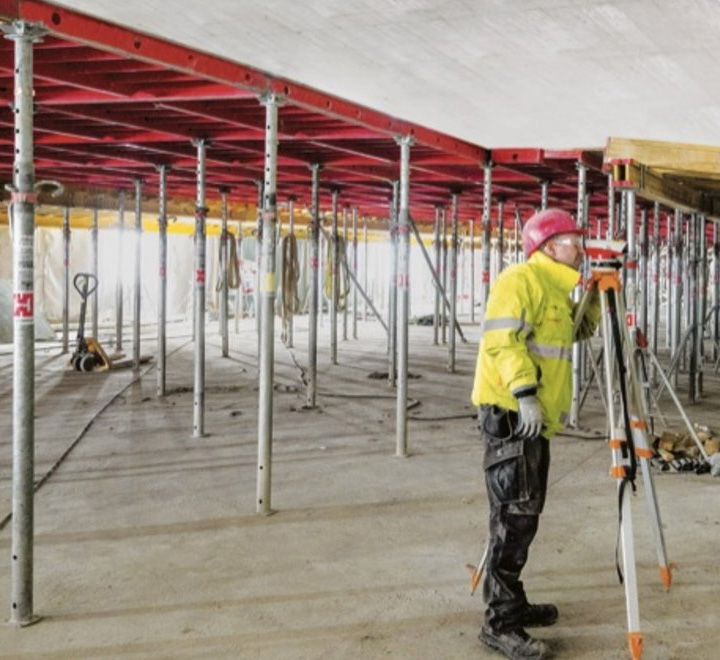
  • Floor formwork

Beam-girder systems on telescopic supports.

For horizontal slabs of underground floors and parking garages.

3. Installation considerations in underground conditions

  • Limited space: the formwork must be modular, easy to disassemble, and reposition. Waterproofing: Formwork is often installed along with waterproofing materials, waterstops, and injection systems.
  • Heavy loads: The pressure of concrete mix in deep underground walls is higher than in above-ground structures, so the formwork must have reinforced locks and spacers.
  • Increased tightness requirements: Minimizing leaks, as underground structures are subject to groundwater pressure.

4. Work sequence

  • Excavation preparation: soil excavation, slope reinforcement, or sheet piling.
  • Foundation construction: concrete preparation, waterproofing.
  • Wall formwork installation: installing panels, bracing with spacers, installing embedded parts.
  • Concrete pouring: layer by layer, with vibration for compaction.
  • Concrete curing: until it reaches stripping strength.
  • Stripping and panel repositioning: The formwork is disassembled and moved to the next section. Floor formwork installation: posts, beams, decking, reinforcement, concreting.
  • Raising to the next level (for multi-story underground structures).

5. Applications in various projects

  • Underground parking lots - panel + floor formwork.
  • Shelters, bomb shelters - tunnel formwork, vaulted formwork.
  • Subway, tunnels - radius and slipform.
  • Basements and technical floors of buildings - panel + beam-beam system.

Formwork is indispensable in the construction of underground structures: bomb shelters, basements, parking lots, etc.

We have horizontal formwork for sale, which you can purchase right now, directly from the manufacturer.

Call us if you have any questions about which formwork to choose. Our qualified managers will advise you on the appropriate formwork and provide a free formwork estimate. Also read our article “What is formwork?

News subscription